
Districts and surroundings · local market
Real estate in the Wola district: local market and transaction services
Properties in the district Wola: a local guide to prices, demand, sales, purchases, rentals and valuations, taking into account the specifics of the district.
District overview
Wola lies directly west of Śródmieście and has been changing rapidly for years. Its proximity to the city center, metro and business districts attracts both people buying a home and investors.
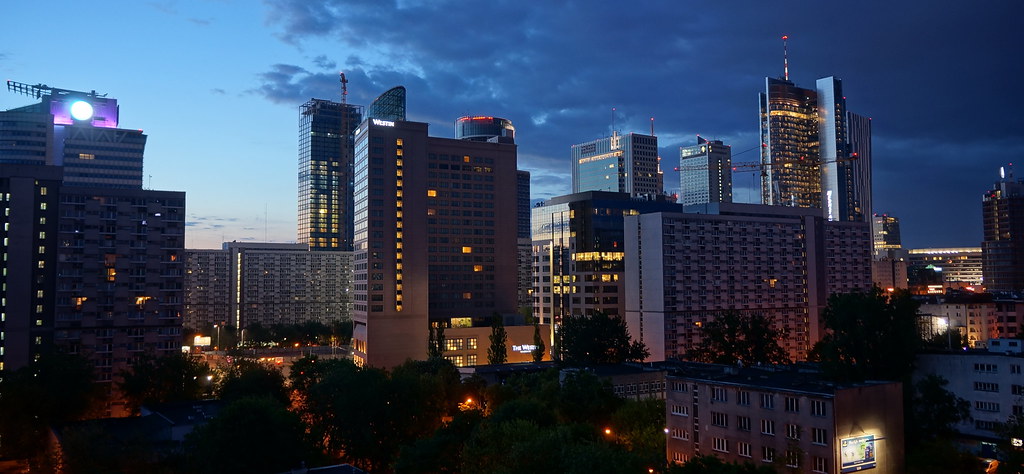
The district has a strong industrial and insurgent history, but the contemporary Wola is also a symbol of the new Warsaw: office buildings, apartment buildings, Warsaw Breweries, new services and intensive development. This tension between history and new architecture is one of the reasons why the district market Wola is so diverse.
Geographically, Wola connects Śródmieście, Bemowo, Żoliborz and Ochota, and the main axes are the metro, Aleja Solidarności, Towarowa, Kasprzaka, Prosta and the area around Rondo Daszyńskiego. For the client, this means quick access to the center, but also the need to assess noise, views and the intensity of development.
Wola often has a reputation as an investment and office district, but in reality it consists of very different fragments. Mirów and the area around Rondo Daszyńskiego operate differently than Odolany, Koło or older housing estates. One apartment may be great for corporate rental, another may be better for a family or for long-term living.
For sellers, Wola requires precise positioning of the offer, because proximity to the center alone is not enough. It is crucial for buyers to distinguish the real value of the location from the price driven by fashion and the newness of the investment.
History of the district
Electoral fields, factories, Jewish community and post-war reconstruction
The name Wola comes from a medieval settlement of the "wola" type, whose inhabitants received temporary relief from part of their duties. Wielka Wola was a village near Warsaw, and its fields became the site of free elections of the kings of the Polish-Lithuanian Commonwealth from the 16th to the 18th century. In the 19th century, the railway, the proximity of the city and available land attracted factories: Norblin, Lilpop, Franaszek, Haberbusch and Schiele, as well as dozens of smaller plants. Workers' housing estates and a multicultural community, including a large Jewish population, grew around them.
Wola was incorporated into Warsaw in 1916. The occupation brought the ghetto, the Holocaust and the massacre of civilians during the Warsaw Uprising in August 1944. After the war, the industry was rebuilt and the district was filled with new housing estates. After 1989, closed factories began to give way to offices and apartments, especially around Rondo Daszyńskiego.
What can still be seen: cemeteries of many denominations, relics of the ghetto and memorial sites, halls of Norblin and Browary Warszawskie, workers' quarters and a sharp contrast with the new center of high-rise buildings.
For new residents
Wola after the move: museums, food halls and clubs in post-industrial interiors
The largest catering centers are located in the Norblin Factory, Browary Warszawskie, at Chłodna Street and around Rondo Daszyńskiego. Further west, the offer becomes more residential, concentrated at Górczewska, Moczydło and local centers.
Museums, theater and music
- Warsaw Uprising Museum: one of the most important historical institutions of the city in a former tram power plant.
- District Museum Wola: exhibitions and a program devoted to the social and industrial history of the district.
- Stage in the Wola district and Progresja Club: a repertoire theater and a large concert stage in two parts of the district.
Food and rest
- Norblin Factory and Browary Warszawskie: food halls, restaurants, cinema and events in renovated industrial complexes.
- Moczydło Park and Lasek na Koło: sports, walking and recreation for the western district Wola.
- Chlodna and Mirów: cafes, bakeries and restaurants in a rapidly changing downtown environment.
Schools and education
- Public primary school and district: a child living in the district is entitled to a place in the assigned school after submitting an application. Choosing a school outside the district means recruiting for vacant places. Before signing the contract, check the perimeter of the exact address and the safe walking route; do not base your decision solely on the description of the real estate offer.
- Recruitment for kindergartens, secondary schools and private schools is carried out according to separate rules and deadlines. Compare the current offer in the city's school database, transport, community center, additional classes and admission procedure for a given year.
Grocery shopping
- Wola Park and Fort Wola: two large centers of the western district Wola with a hypermarket, shops and everyday services.
- BioBazar at the Norblin Factory: organic food and products from exhibitors closer to the district center; check current operating days.
Practically: Check the night noise and traffic at premises and construction sites around Rondo Daszyńskiego. Eastern and western Wola differ in the density of culture, gastronomy and greenery.
Check schools, stores, programs and current information
Properties in the district Wola
At Jagiełło and Partners, we compare properties in the Wola district with similar premises, houses or commercial spaces, instead of basing the decision on the overall average for the city.
- Real estate in Warsaw
- real estate market in Warsaw
- apartment valuation in Warsaw
- local consultation
Local market
New apartments, investment demand and rapidly changing business areas are particularly important in this district. Offer prices must be compared with the prices of similar premises, and not with the price level in the entire city.
This is especially important when selling, because the proper justification of the price depends on the building, street, standard and actual group of buyers.
- building type
- standard
- exposure time
- demand for real estate on a specific street
Information for buyers
The buyer should check whether the property fits into the daily rhythm of life: access, services, greenery, family plans or intended for rent. The main connections are metro, trams and good east-west connections.
The best property is not always the most attractive offer. It's the one that fits the customer's budget, usage and long-term plan.
Information for sellers
The seller should know which features of the property in the Wola district are the strongest argument and which may reduce interest. This affects the price, description, photos and negotiations.
We focus on clearly demonstrating the strongest local arguments and sorting out risks before they undermine sales.
Schools, transportation and amenities
Transport: metro, trams and good east-west connections. Amenities: office towers, Browary Warszawskie, parks and services. Before choosing a property, check the daily route, noise, parking and nearby services.
Schools and family infrastructure are important to many buyers, but in Warsaw it is best to evaluate them together with access, the quality of the housing estate and the real rhythm of the area.
Local market context
We evaluate the local market by property type, building condition, floor, exposure, demand, price context and buyer or seller goal.
If you are selling, the best first step is usually a valuation. If you are buying, start by narrowing down the area and price range before filling your calendar with viewings.
- two- or three-room apartment
- premium premises
- investment property
- house or section
Official transaction data
Transaction prices of apartments in the Wola district, RCIWN documents from 2025
The aggregate includes residential premises sold on the free secondary market and registered in the Register of Real Estate Prices and Values of the Capital City of Warsaw. Warsaw based on documents from 2025.
How to read this data
This is a market description, not an automatic valuation of a specific apartment. The given year is the year of preparation of the document registered in the RCIWN. The list removes repetitions regarding premises and transactions, uses the gross price of the premises and usable area, and rejects observations outside the range of PLN 3,000-80,000/m² and 10-400 m² as requiring separate verification.
The price of a specific premises is influenced by, among others: street, building, floor, condition, exposure, layout, title to the property and current competition. Source: RCIWN m.st. Warsaw; REST service documentation. Data downloaded on July 10, 2026.
FAQ
Frequently asked questions
Is Wola a good neighborhood to buy?
It depends on the goal. Wola may be a good choice if the property fits your budget, access and use plan.
How to price an apartment in the Wola district?
It is best to compare similar premises in the same part of the district, rather than the average for the entire Warsaw.
Do you help sellers and buyers in this district?
Yes. We help with valuation, analysis of offers, negotiations and understanding the provisions of the contract.
Related topics
Related pages and services
Next step
Ask about real estate in the Wola district
Briefly describe the property, neighborhood or purpose. We will answer specifically and indicate the next step.
Ask about real estate in the Wola district